


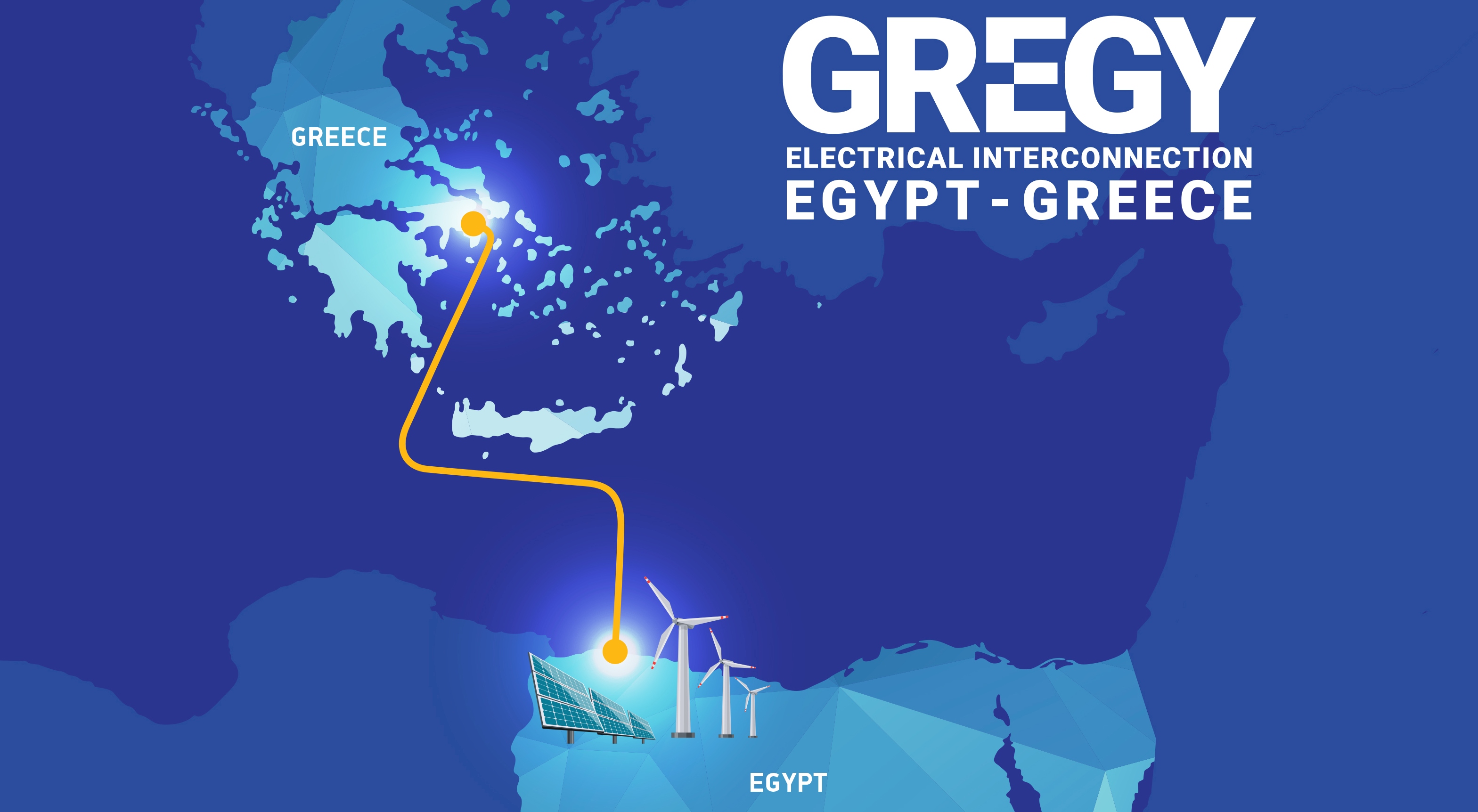
According to the company „Copelouzos Group“, through the Egypt-Greece interconnection (GREGY), renewable electricity produced in Egypt will be transmitted to Greece and from there to European markets, including Bulgaria; according to a preliminary estimate, the implementation of the project will contribute to reducing carbon emissions by about 9 million tons of CO₂ per year and will allow the replacement of approximately 4.5 billion cubic meters of natural gas on an annual basis.
The European Commission has approved a grant of €9,560,000 for the preparation of follow-up studies for the Egypt-Greece (GREGY) flagship electricity interconnection project. The decision marks a key step forward in accelerating the implementation of the project, which, according to the project initiator, the „Copelouzos Group“, is of strategic importance for Europe's energy security and green transition.
After the completion of the first surveys, the project moves to the next key stage of its development – the preparation of a seabed mapping survey (marine reconnaissance survey), which will be carried out with a specially equipped vessel. The decision also notes that GREGY is the only Greek project to have received grant funding from the European Commission.
The GREGY project, developed by ELICA INTERCONNECTOR S.M. S.A., part of the „Copelouzos Group“, envisages the construction of a vertical green energy corridor from south to north. Through it, renewable electricity produced in Egypt will be transported to Greece and from there to European markets, including Bulgaria, ensuring access to clean energy under competitive conditions.
The planned total capacity of GREGY is 3,000 MW with the possibility of bidirectional energy transfer. According to a preliminary assessment, the implementation of the project will contribute to reducing carbon emissions by about 9 million tons of CO₂ per year and will allow the replacement of approximately 4.5 billion cubic meters of natural gas on an annual basis.
The project will harness the potential and efficiency of solar and wind energy in Egypt and is aimed at meeting the growing demand for green energy in Europe, including as part of efforts to reduce dependence on Russian natural gas and increase security of energy supplies.
GREGY will directly contribute to sustainable development, energy independence, and the stability and competitiveness of the industry in the region. Its implementation will establish Greece as a significant energy hub in Southeastern Europe and will bring tangible benefits to the country's economy and security.
The "Copelouzos Group" insists that the European Commission's decision represents yet another confirmation of strong European support for the project, following its inclusion in the EU's list of projects of common/mutual interest, as well as among the leading infrastructure initiatives of the „Global Gateway“ program.
The „Copelouzos Group“ also claims that the „strategic importance of GREGY“ has already been recognized by the United States, after the competent Committee on International Affairs of the House of Representatives of the US Congress approved the bill „Eastern Mediterranean Gateway Act“, in which the GREGY electricity interconnection is among the four projects of strategic importance for improving connectivity and security in the Eastern Mediterranean.
For further information and media inquiries, please contact John Karidas, CEO Renewables, Energy Storage and Interconnections at Copelouzos Group, [email protected]